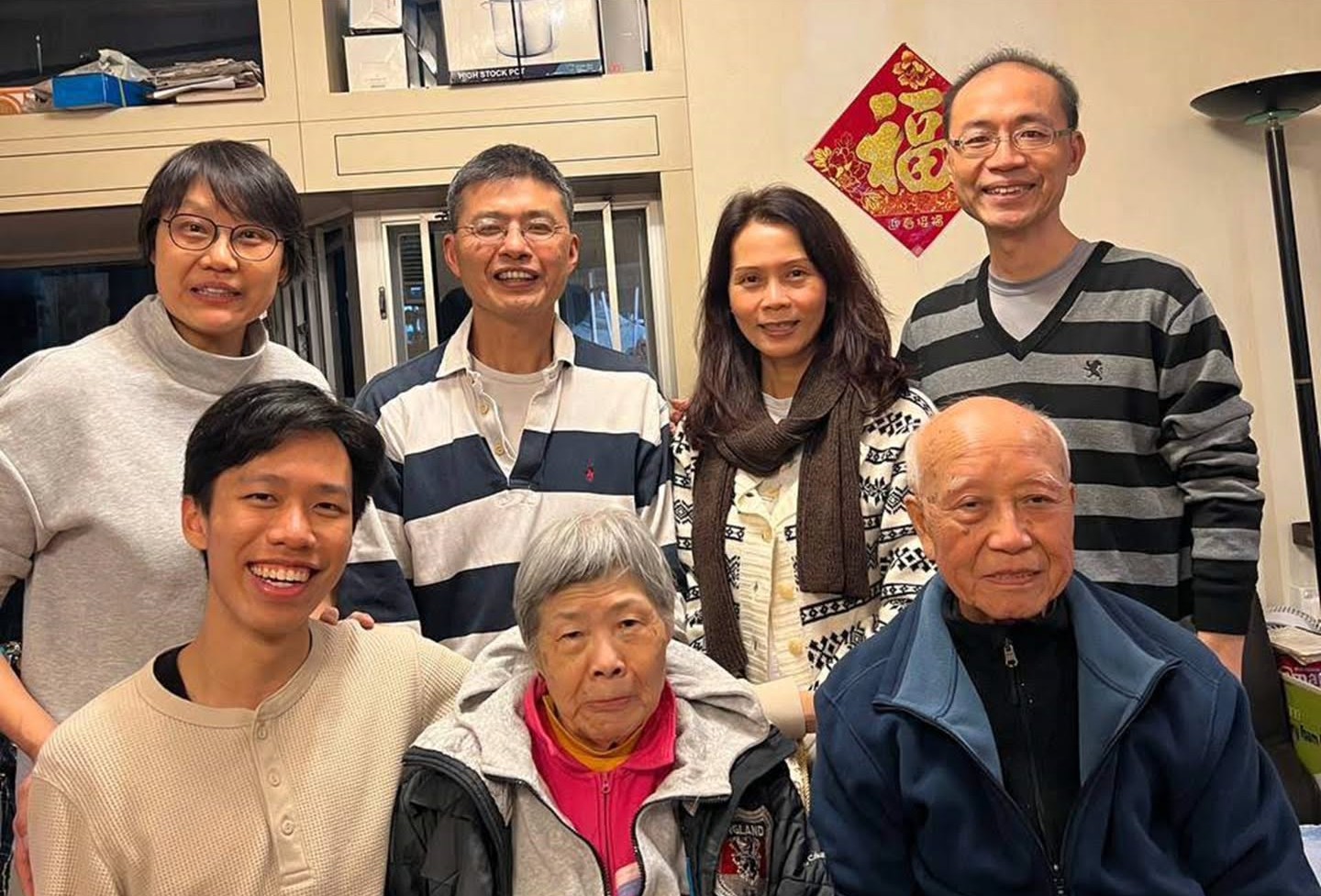
I was born in Hong Kong, and I still hold Hong Kong citizenship today. Yet, I don’t remember too much of my time in Hong Kong. Having spent my high school years in Singapore, I grew up while my grandparents grew old, separated by yearly four-hour flights and weekly (or sometimes even monthly) phone calls.
It was my first solo flight back to Hong Kong – I hadn’t visited back in 4 years due to COVID-19. I thought about what I hoped to achieve during the trip. More than just a Hong Konger, I questioned the relationship between me and my grandparents. Admittedly, I hadn’t felt much for them. Weekly calls felt like forced, artificial interactions. And so I wondered what I would make out of this trip - how I could resolve this dying query that I had.
The question of what family was kept ringing out to me. Is it just a physical construct, one that I’m consigned to by Asian values? I’m not saying that I don’t agree with the values of filial piety and respecting our elders. But I’m just questioning, if in such a world, is family sometimes a forced construct in which we grow, an identity that we’re told to accept, obligations that we embrace because we’re a part of it?
***
The environment was clearly foreign back at home in Hong Kong. I felt forced within my family – why do my grandparents, my aunt and uncle have to be so nice to me? I don’t deserve it. Just because I’m a part of their family, related by blood, they have to treat me well? I felt that I was leeching on to them. I don’t feel welcome. Beyond visiting my grandparents, I also went around Hong Kong with friends as part of our grad trip, and I’d said, I’d rather be in a hostel, I‘d rather not trouble my family for this visit. Of course, that thought was not entertained by my Hong Kong family who shared that they would welcome me anytime.
I recall my first breakfast - I’m out with my uncle and my grandpa. My uncle had brought us down to the restaurant, he created this opportunity that he thought perhaps I could connect closer with my grandpa. And yet, my grandpa and I are socially awkward. We don’t know what to talk to each other about. The last conversations I remember about my grandpa are the fish market visits that he does every morning, perhaps any latest news articles, and the chess game last played 4 years ago. We face phrasing barriers at times because of my different accented Cantonese.
At times, my grandmother did not recognize me. She has a bad memory, sometimes not even recognizing my uncle who returns back home multiple times every week for dinner. She tries to chase me out of the house, and I feel foreign. My aunt and grandfather insist otherwise. I’m a part of the family, and obviously I should belong, they are welcoming me. However, I was completely unused to this unexpected behaviour from my grandma – perpetuating the idea that I was just “leeching” off from my grandparents, people I’m just not close to.
***
One dinner, my aunt whips out old photo books. My grandma still can’t recognize me now, in-person, but she can recognize me from the old photo books. Throughout the next weeks, she asks me “so Tat Fai is your dad? What do you call him (pointing to my grandfather)?” She remembers who I am at times, occasionally doesn’t, but when she’s corrected to recognize me as her grandson, she doesn’t question that she has to love me and care for me.
I flip through the photo books. I see the past pictures of how my grandma looked when she was much younger - when she witnessed my parents’ marriage, when she cared for me when I was young, and I see how she played such a key role in the family. I get a stronger reasoning to why my aunt doesn’t even work nowadays, simply caring for my grandma full-time even throughout her consistent tantrums and difficulties. I get used to the family dinners and the jokes that my grandma cracks. I get used to caring for her, adapting to her reluctant-to-change habits.
Another familiar sight I remember fondly is that whenever my grandma failed to recognize me—perhaps every 15 minutes—my grandpa would lovingly say to her, "你又不认识他? 是你的孙子啊!" (You don’t recognize him? He’s your grandson!) This would be followed by a few exchanges of disbelief. But this intimate moment between my grandpa and grandma reminded me of their enduring relationship over the years – it’s heartwarming. Again and again, my grandpa would clutch my grandma’s hands in his, attempting to repeat the logical breakdown to her: "你的儿子是谁?那你儿子的儿子是谁?" (Who is your son? Then who is your son’s son?) It was quite funny to witness.
My grandpa is a natural Geographer and a cook. He has high standards, and nobody in the family dares to question his cooking suggestions. He knows HK in and out, the names of various mansions that are kilometres away from him, a result of his years of experience in this country. Sometimes, our family’s conversations recount his past memories in these various places - it’s interesting to hear, and I slowly get to know him more as a person.
***
My solo return back to Hong Kong was a short 2 weeks to me, a getaway from my studies back in Singapore. But to my grandparents, especially to my grandma when she recognized me, it was a monumental occasion that I came back. The importance of this occasion was also evident by the ever-flowing servings of crabs and lobsters that they would only cook when either my family or I was around (a representation of their silent love).
Reaching the end of the trip, I got used to how my grandparents lived their lives, and could finally catch along conversations with my grandpa about his day better; and I got used to interacting more cheekily with my forgetful grandma, telling her that I was her grandson and asking about all her stories when she was younger. Is everything about family necessarily tangible or explained by reasoning or logic? Maybe it’s forced at times. But it has its meaning. The family dinners are still a chore. But I think I’ve found a little meaning to these interactions that are within Asian culture.
It’s not like I’ve found the closest belonging to my grandparents. If I’m out travelling, and someone asks me what my identity is, and whether I’m a Hong Konger or Singaporean, I don’t have a straight answer. The conflict is the same - I’m a Hong Konger by citizenship, but a big part of my identity is still shaped by my experiences in Singapore. And yet, I feel like I found a stronger meaning to what it means to be a part of the Lam family, a little meaning to why I belong in HK.